
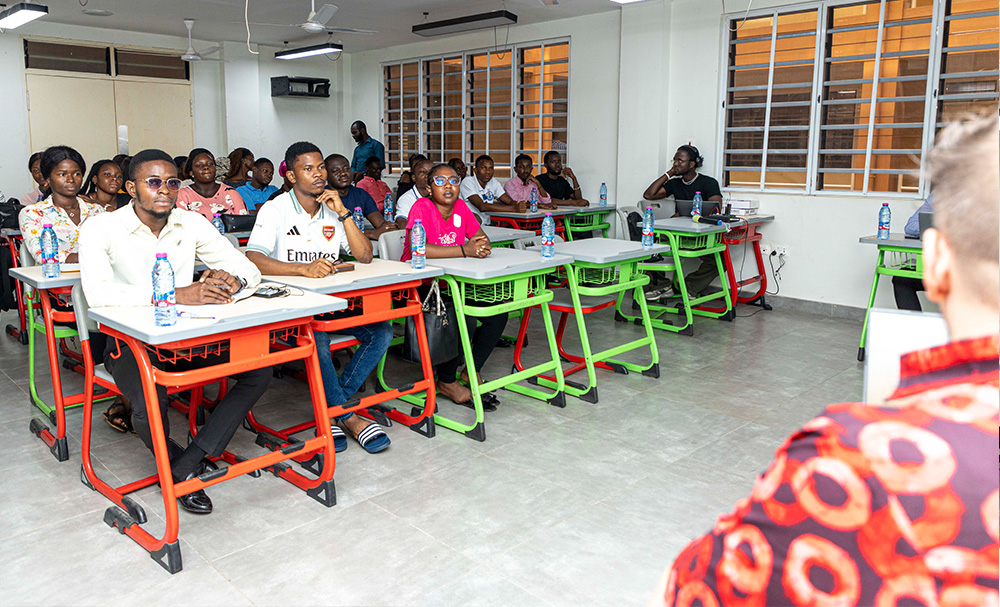
Another edition of the Kumasi Conversations has explored the topic “The Social Life of a Curse,” examining how traditional belief systems continue to influence social order, justice, and behaviour in many communities.
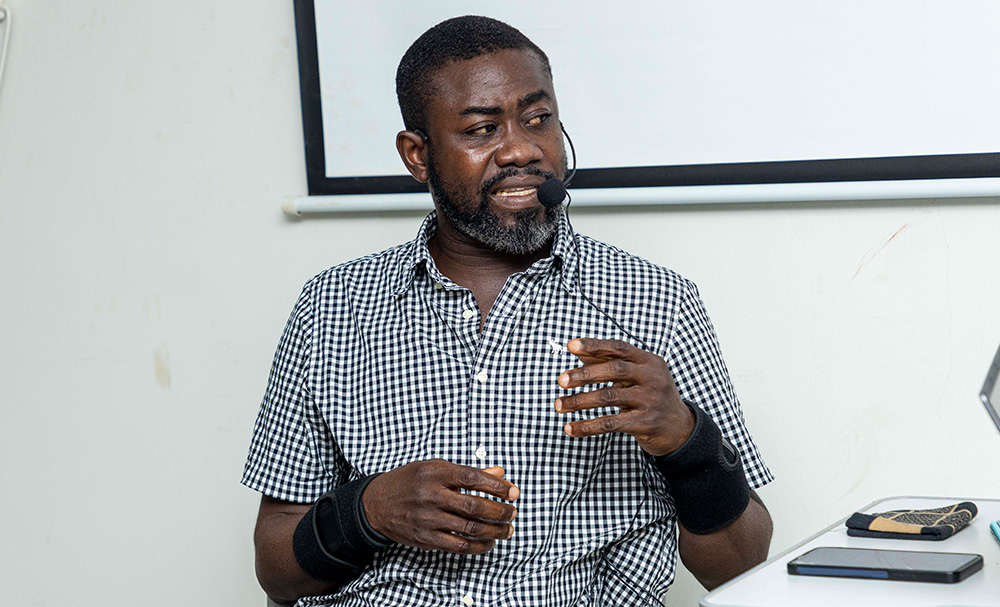
The dialogue featured Mr. Michael Kojo Ntiamoah, a lecturer in the Department of Religious Studies at the Kwame Nkrumah University of Science and Technology, Kumasi (KNUST), and Prof. Marius Storvik, a legal scholar from the Faculty of Law, UiT The Arctic University of Norway, as panelists. The discussion explored how curses function within African traditional belief systems and how they interact with modern legal institutions.
According to Mr. Ntiamoah, curses in many African societies are closely tied to traditional religious beliefs and are often invoked as a means of seeking justice, protection or revenge. He explained that such practices form part of broader indigenous belief systems in which ancestors and spiritual entities are regarded as unseen enforcers of moral order.
“The ancestors are seen as unseen public officers of morality, so they enforce people to live according to the laws of society” he said.
Mr. Ntiamoah said that this belief system historically functioned as a form of social regulation before modern policing structures were introduced. He cited examples of how curses function as informal systems of social control.
“In those days there were no police. The ancestors were the police in this system,” he explained. ‘‘Farmers and traders, for instance, place symbolic warnings or invoke spiritual sanctions to deter theft, allowing them to protect their property without relying solely on formal law enforcement.’’
He further stated that religion and culture are deeply intertwined in African societies, making it difficult to draw clear boundaries between them.
“For us, we see culture as a totality,” Mr. Ntiamoah noted. “Religion is part of the culture, and the culture is the way people understand and respond to reality in life.”
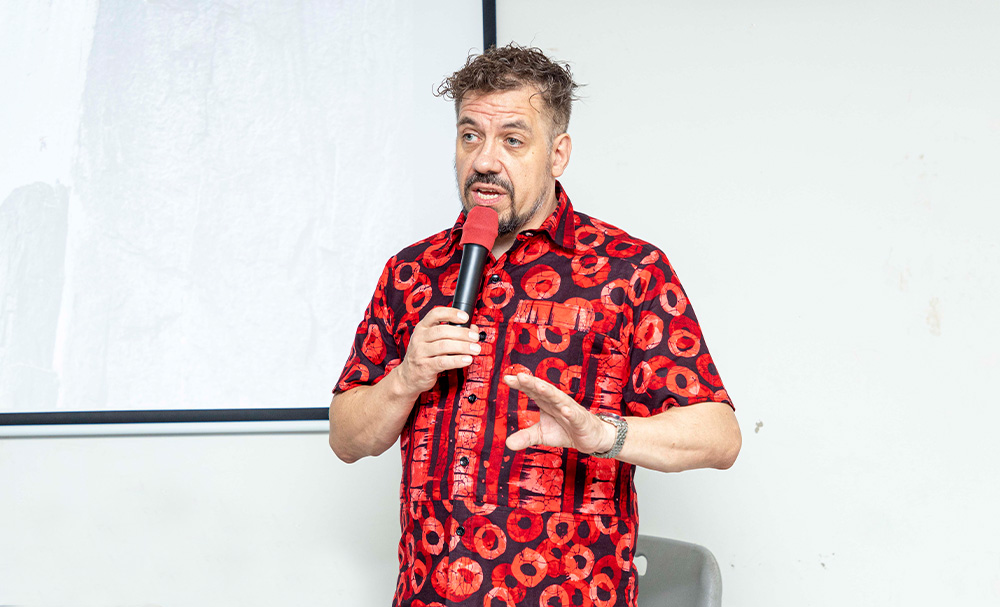
During the discussion, Prof. Storvik shared sentiments on how belief in the power of curses can influence behaviour even without direct proof of supernatural intervention. Prof. Marius Storvik further illustrated the concept using the example of his visit to the Antoa Nyamaa Shrine, a well-known traditional site associated with curses.
He explained that although he approaches the subject as a legal scholar rather than a spiritual authority, the social effects of belief are undeniable.
“I’m a legal scholar and I have no insight into the spiritual reality,” he said. “I’m a lawyer, so I don’t know anything about that. But still, I can say that Antoa Nyamaa has power.”
Prof. Storvik noted that power lies not necessarily in proving the supernatural dimension, but in the belief people attach to it.
“The reason I can say it has power is that people believe in the power of the river and people believe in the power of curses,” he explained. “Because people believe in it, they adjust their behaviour avoid possible consequences.”
He added that this behavioural change is what ultimately gives such beliefs their social influence.
“When belief changes people’s behaviour, that is what we call power,” he said. “So the belief in the river has power in itself.”
He compared this phenomenon to the strong public belief in the effectiveness of the police in countries like Norway. In Norway, he explained, strong belief in the effectiveness of law enforcement often shapes people’s behaviour, even when the legal system may not always resolve every case.
“The best parallel I have for the curses is that in Norway we have the belief in the police,” he said, sharing examples of an experience his friend encountered.
Story: Abigail Ofori| Belinda Opoku Danso Photos: Isaac Kwaku Duah


